Hello! I am the website's guide, not Osama himself. Ask about his story, the courses, Dahab's dive sites or the trips. For anything to arrange, I will point you to him on WhatsApp.
Three taps
Which dive is right for me?
Have you dived before?
The year on this shore
When are you coming?
Where people start
Most of the people I take into the water have never breathed underwater before.
- An intro dive
- A shallow, sheltered entry at the Lighthouse, the authorised spot in town. No certification, just a first breath underwater. The water is confined and easy, but do not let that fool you: the fish and the coral are right there. It is how you find out whether you love this before you give it any more of your time.
- Open Water
- The certification that works anywhere in the world. The real work is not the depth. It is handling your equipment, dealing with something going wrong, and finding your buoyancy. People leave able to dive, not just able to say they have dived.
Who comes with me
- People who have never done it
- Most of them. Nervous is normal and it is not a problem. Small groups, slow briefings, and the same reef I learned on. Nobody is going anywhere until they are ready.
- Children
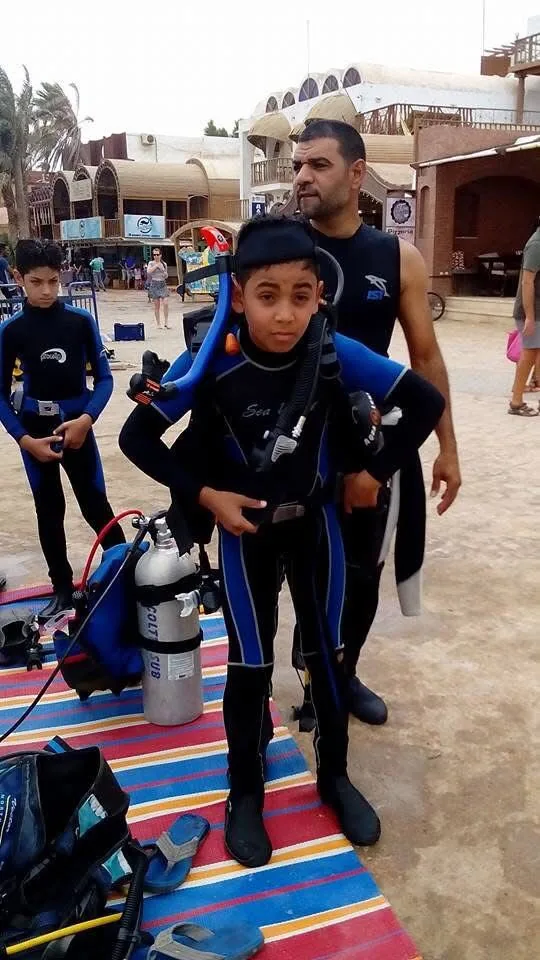
- I teach children, and my own son learned in this water. The minimum ages come from the training standards and the centre confirms them. What I watch is whether the child is comfortable and enjoying it, and I will tell you honestly after the first session.
- Divers who are already certified
- Come and dive. I know where the light is good, where the current turns, and which sites are worth the walk on the day you are here.
- In English or in Arabic
- Arabic is my first language. My training and my certifications are in English and I teach in it every day, so take whichever you are more comfortable in. Under water it is hand signals either way.
Where it opens up
- Advanced
- Deep and Underwater Navigation are the two you must do, then three you choose from boat, buoyancy, night and fish identification. Navigation is not really about the compass. It is learning to read light, current and reef, and keeping the compass as a backup. This is also where I teach people to look after the reef they are swimming over.
- Rescue Diver
- Open Water teaches you to look after yourself. Rescue is about everybody else. It changes how people see diving. I am strict about the twenty dives, and I do not bend it, because competence has to come before the certificate.
- Specialties
- Each one sharpens something you already have and opens sites you could not dive before. Which ones are worth your time depends entirely on the reefs you want to be on, so I would rather talk about that than hand you a list.
If you want it to be your work
- Divemaster
- Several weeks at my side. It is the first professional level: leading dives, assisting instructors, handling divers of every level. It is a career if you want one, and a different way of seeing the same reef either way.
Two days out
- The Blue Hole
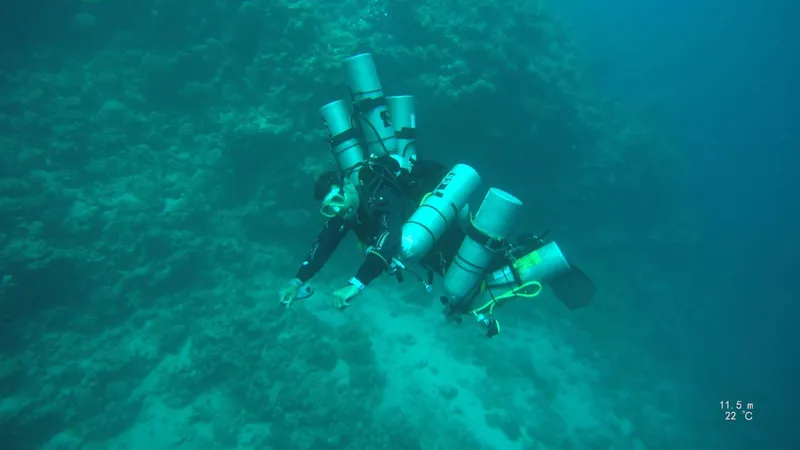
- People ask how I am not tired of it after a thousand dives there. It holds more moods than the sea has colours. The Arch belongs to the technical divers, and recreational diving here stops at forty metres. That is not a preference, it is the rule I dive by.
- Ras Abu Galum
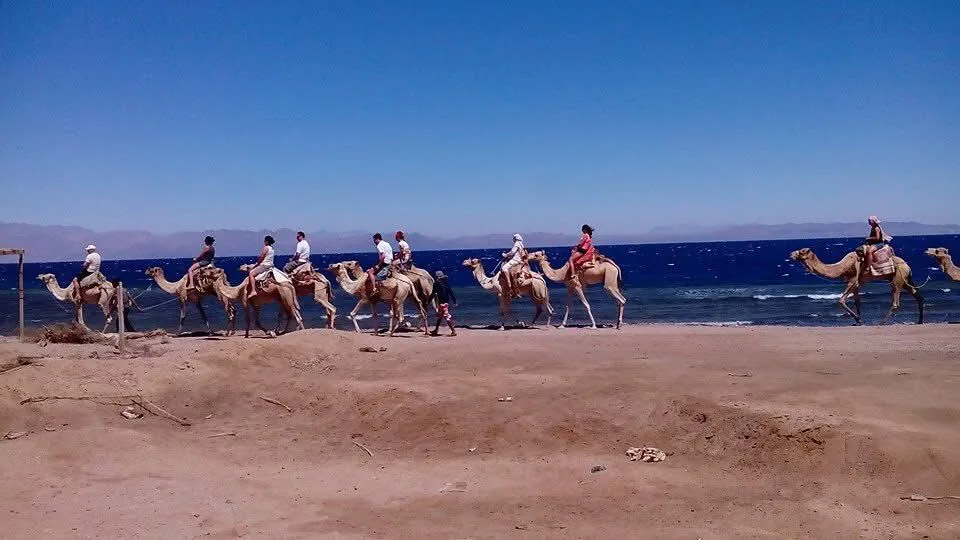
- Before the trucks and the cars, Bedouins crossed Sinai by camel. The ride goes through bronze canyons to reefs no speedboat will ever reach. Snorkellers are welcome with a private guide, and the guide stays in the water with you the whole time. Nobody gets dropped off.
How it actually happens
A day with Osama · Dahab time
This is where his day probably is right now.
 6:30 AM
First light on the gulf. The wind is still asleep and the water is glass.
 8:00 AM
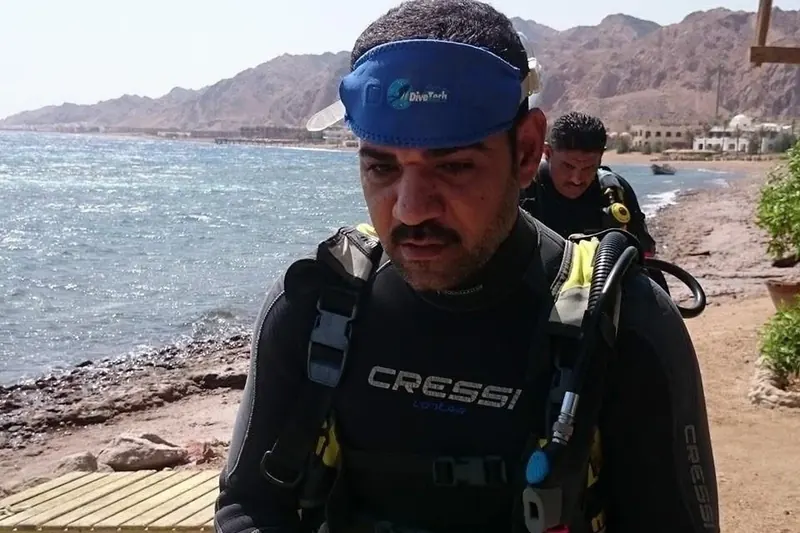
On the sand at Assalah, gear on, the briefing drawn in the sand.
 9:30 AM
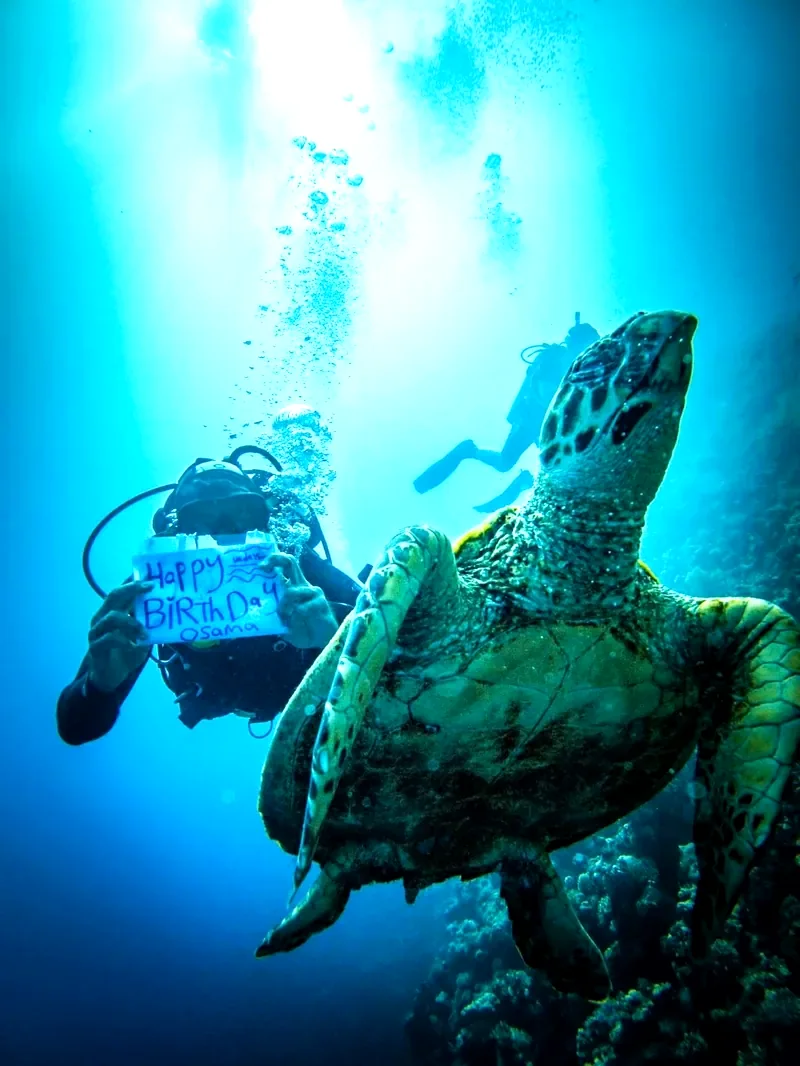
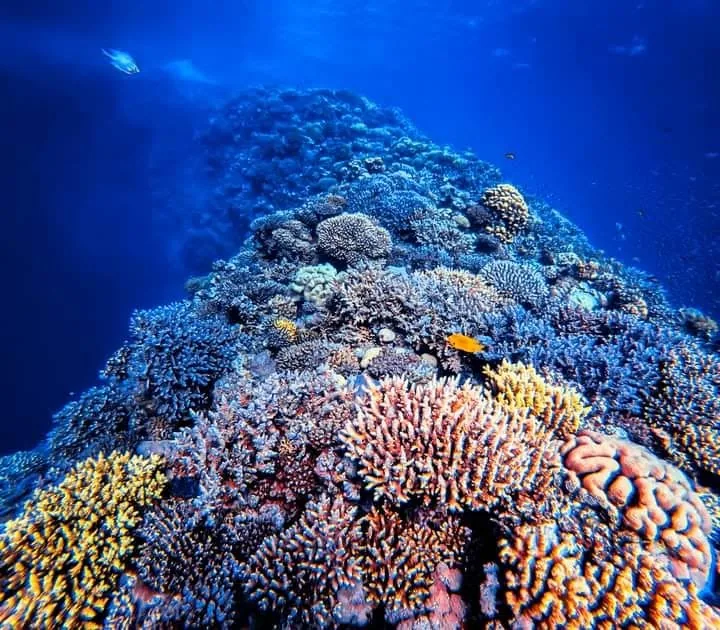
First dive. Om El Seed, seven metres, where every first breath starts.
 12:00 PM
Tea, a surface interval, and the second dive: the edge of the Blue Hole.
 2:00 PM
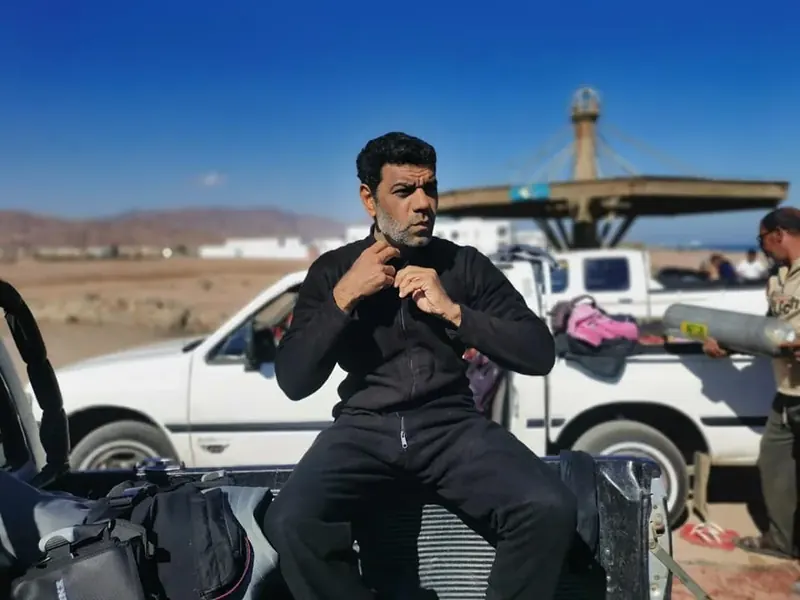
Tanks back on the truck. Lunch is long in Dahab.
 4:00 PM
Gear rinsed, tanks lined up for tomorrow, logbooks open on the table.
 5:00 PM
Stamps and signatures. A certificate photograph on the street at Assalah.
 7:00 PM
The sun goes behind the mountains. Shark Restaurant, the family table since 1983.
Message me and tell me what you would like to do and roughly when. I will tell you honestly whether it suits you or whether something else would suit you better, and I will point you to the centre I would run it through. The paperwork and the arrangements happen there.
Message Osama on WhatsAppIf you would rather read first, the journal is where I write things down, the dive sites are described one by one, and the photographs are mine.